Saturday, 21 October 2017

TATA NANO CASE STUDY


GRITTING TO ALL, Today I am going to introduce India's lowest budget car, yes I am talking about TATA NANO, so today I will clarify why tata nano fails in Indian market now I will put some fact regarding nano.


Case Study on Tata Nano

History


After having successfully launched the low-cost Tata Ace truck in 2005, Tata Motors began development of an affordable car that would appeal to the many Indians who ride motorcycles.The purchase price of this no-frills auto was brought down by dispensing with most nonessential features, reducing the amount of steel used in its construction, and relying on low-cost Indian labour

Price


Rear
Announced as the most affordable production car in the world, Tata aimed for a price of one lakh rupees, or 100,000, which was approximately $2,000 US at the time.] only the very first customers were able to purchase the car at that price, however, and as of 2017, the price for the basic Nano starts around  215,000.[15]Increasing material costs may be to blame for this rapid rise in price.
Compared to the Volkswagen Beetle it has a relatively low price, however. In 1990, a Beetle from Mexican factories was priced at $5,300,[ about $9,716 in today's money. The Ford Model T's initial price was about $850, equivalent to $22,657 today.[The price of the Nano is only just higher than the corrected Price of the Briggs & Stratton Flyer with the Flyer costing US$125 ($1,767 in 2016), even though the Flyer would today hardly be considered a go-kart.

Comparison

Let have to look given Comparison  between TATA NANO and MARUTI 800


Comparison with the Maruti 800, the Tata Nano's closest competitor:
Tata NanoMaruti ALTO 800
* The Nano's trunk is only accessible from inside the car, as the rear hatch does not open,[ but it eventually received a full hatchback in 2015.* Maruti 800 initially had only an opening rear-windscreen, but later got a full hatchback.
* One windscreen wiper instead of the usual pair* Two windscreen wipers.
* No power steering initially, unnecessary due to its lightweight. Added in higher variants in later models.* Power Steering only in higher variants.
* Three lug nuts on the wheels instead of the usual four* Four lug nuts per wheel.
* Only one wing mirror on base models. Higher variants fitted with passenger side ORVM from 2012 onwards.* Both side ORVMs in certain variants.
* Radio or CD player is optional* Radio or CD player is optional
* No airbags on any model* no airbag in any variant.
* 624cc rear engine has 2 bigger cylinders (312cc each)* 800cc front engine has 3 smaller cylinders (266cc each).
* No air conditioning in base model* No air conditioning in base model
* Front passenger seat same as the driver seat, and the headrests are integrated.* Front passenger seat same as the driver seat, but headrests separate. Later models switched to integrated headrests.
* Thinner 135/70-R12 space saver spare tyre.* Full-size spare tyre.
* No external fuel filler cap. Fuel inlet is accessed by opening the front hood.* External fuel filler cap.
* Front door power windows only offered on the highest variant. PW switches placed on a central console rather than on door pads.* Front door power windows only offered on the highest variant.

Technical specifications


Let's look Technical Specifications of TATA NANO

The Nano (2012) is a 38 PS (28 kW; 37 hp) car with a two-cylinder 624 cc engine mounted in the rear of the car.
The car complies with Bharat Stage 4 Indian Emissions Standards, which is roughly equivalent to Euro 4.
The development of the Nano had led to 31 design and 37 technology patents being 

iled.
Engine:2 cylinder petrol with Bosch multi-point fuel injection (single injector) all aluminium 38 metric horsepower (28 kW) 624 cc(38 cu in)
Value Motronic engine management platform from Robert Bosch GmbH
2 valves per cylinder overhead camshaft
Compression ratio: 9.5:1
bore × stroke: 73.5 mm (2.9 in) × 73.5 mm (2.9 in)
Power: 38 PS (28 kW; 37 hp) @ 5500 +/-500 rpm
Torque: 51 N·m (38 ft·lbf) @ 3000 +/-500 rpm
Layout and TransmissionRear wheel drive
4-speed manual transmission
Steeringmechanical rack and pinion w/o servo
Turning radius: 4 metres
PerformanceAcceleration: 0-60 km/h (37 mph): 30 seconds
Maximum speed: 105 km/h (65 mph)
Fuel efficiency (overall): 25.35 kilometres per litre (4.24 litres per 100 kilometres (66.6 mpg‑imp; 55.5 mpg‑US))
Body and dimensionsSeatbelt: 4
Trunk capacity: 150 L (5.3 cu ft)
Suspension, Tires & BrakesFront brake: 180 mm drum
Rear brake: 180 mm drum
Front track: 1,325 mm (52.2 in)
Rear track: 1,315 mm (51.8 in)
Ground clearance: 180 mm (7.1 in)
Front suspension: MacPherson strut with lower A-arm
Rear suspension: Independent coil spring
12-inch wheels
SupplierPart/system
TexspinClutch Bearings
BoschOxygen sensor, Gasoline injection system (diesel will follow), starter, alternator, brake system
Continental AGGasoline fuel supply system, fuel level sensor
CaparoInner structural panels
HSI AUTOStatic sealing systems (Weather Strips)
DelphiInstrument cluster
Rane Madras LimitedSteering Assembly
DensoWindshield wiper system (single motor and arm)
FAG KugelfischerRear-wheel bearing
Federal-MogulPistons, Piston rings, Spark plugs, Gaskets, Systems protection
FicosaRear-view mirrors, interior mirrors, manual and CVT shifters, washer system
FreudenbergEngine sealing
GKNDriveshafts
INAShifting elements
ITW DeltarOutside and inside door handles
Johnson ControlsSeating
MahleCamshafts, spin-on oil filters, fuel filters and air cleaners
Saint-GobainGlass
TRWBrake system
Ceekay Daikin/ValeoClutch sets
VibracousticEngine mounts
VisteonAir induction system
ZF Friedrichshafen AGChassis components, including tie rods
BehrHVAC for the luxury version
DürrLean Paint Shop

Thursday, 19 October 2017

Ford Case Study


The Ford Motor Company is an American multinational automaker headquartered in Dearborn, Michigan, a suburb of Detroit. It was founded by Henry Ford and incorporated on June 16, 1903

History 

Let have to look History of ford

FORD COMPANY is an American automaker and the world's fifth largest automaker based on worldwide vehicle sales. Based in Dearborn, Michigan, a suburb of Detroit, the automaker was founded by Henry Ford, on June 16, 1903. Ford Motor Company would go on to become one of the largest and most profitable companies in the world, as well as being one of the few to survive the Great Depression. The largest family-controlled company in the world, the Ford Motor Company has been in continuous family control for over 110 years.


Issues:

» analyze the factors that led the company to devise the ‘One Ford' strategy
» appreciate the efforts made by the company to realign its organizational structure so as to match market reality and changing customer preferences
» critically analyze the implementation of the ‘One Ford' strategy
» assess the future prospects of the company in light of the restructuring effort

Foundation


Image result for ford logo pngHenry Ford built his first automobile car, which he called a quadricycle, at his home in Detroit in 1896. The location has been redeveloped, where the Michigan Building now stands, and the tracks for the Detroit People Mover and the Times Square People Mover station are nearby. At the entrance to the Michigan Building, there is a commemorative plaque identifying the original location of the Ford home. The coal shed has been recreated using the original bricks at Greenfield Village in nearby Dearborn.[ His initial foray into automobile manufacturing was the Detroit Automobile Company, founded in 1899. The company foundered, and in 1901 was reorganized as the Henry Ford Company. In March 1902, after falling out with his financial backers, Ford left the company with the rights to his name and 900 dollars.
Henry Ford turned to an acquaintance, coal dealer Alexander Y. Malcomson, to help finance another automobile company. Malcomson put up the money to start the partnership "Ford and Malcomson" and the pair designed a car and began ordering parts. However, by February 1903, Ford and Malcomson had gone through more money than expected, and the manufacturing firm of John and Horace Dodge, who had made parts for Ford and Malcomson, was demanding payment. Malcomson, constrained by his coal business demands, turned to his uncle John S. Gray, the president of the German-American Savings Bank and a good friend. Malcomson proposed incorporating Ford and Malcomson to bring in new investors and wanted Gray to join the company, thinking that Gray's name would attract other investors.

Excerpts

The 1990s

The early 1990s was a tough period for Ford, as it was for the rest of the auto industry. In 1991, Ford's worldwide automotive operations incurred a loss of $3.2 billion. The company's automotive losses in the US alone amounted to $2.3 billion. This was a significant blow to the company and quite unexpected too as it was only in 1989 that it had earned $3.3 billion in net income. However, the silver lining for Ford was that it had accumulated around $115 billion in banking-related assets. The financial figures for 1991 would have looked a lot worse if the company had not diversified into the financial services sector. For the year, Ford's financial services group recorded $927 million in earnings...
Image result for ford groth structure

The Early 2000s

In the early part of the 21st century, Ford took several steps with the aim of strengthening its competitiveness. It spun off its Visteon unit, acquired BMW's Land Rover SUV business, and upped its stake in Hertz . However, one unexpected event was to adversely impact its financial health - the recall of over 6.5 million Firestone brand tires. These tires were used as original equipment on the Ford Explorer, the Mercury Mountaineer, the Ranger, and some of its F-150 pickups. In what was then the largest recall in automotive history, Ford was compelled to call back over 300,000 vehicles and replace over 13 million Firestone tires at a cost of $3.5 billion . In 2001, the company incurred a loss of $5.45 billion. Nasser was asked to step down late that year, leaving William Clay Ford, Jr., in charge. Amid cut-throat competition, sluggish sales, low employee morale, and quality issues, Ford Jr. had his work cut out to revive the company...

The 'One Ford' Strategy

In September 2006, Alan Mulally was appointed CEO of Ford. Soon after, he unveiled the 'One Ford' strategy in an effort to stimulate growth.

ONE TEAM

The first component of the 'One Ford' strategy concerned people. It recognized the importance of a skilled and motivated workforce working together as a team. The company planned to develop a winning team by putting in place the principles and practices that would unlock the full potential of its employees. To start with, all employees who were connected to a project were to be included in the decision-making process. While work was to be assigned to teams, individuals were to be given authority and held accountable for delivering results....

ONE PLAN

The second component of the strategy was a single plan for the entire global enterprise, with unambiguous performance goals. Traditionally, Ford's regional operations operated as autonomous business units. While many of these units had been successful, it was felt that this mode of operation was too inefficient and would not be sustainable in the long run. The 'One Plan' involved replacing disparate units with a single, unified entity...

Implementing the Strategy

Ford set out to implement the 'One Ford' strategy. Its initial focus was on securing financing as this was vital for the restructuring efforts.

SECURING THE FINANCING

In December 2006, Ford secured $23.5 billion of new liquidity. In addition, the company obtained a convertible debt of $4.95 billion, a secured term loan of $7 billion, and a secured revolving credit facility of $11.5 billion. This amounted to total automotive liquidity of about $46 billion at year-end 2006. The company intended to utilize this liquidity to fund the restructuring and product development initiatives. It was also to act as a cushion for unforeseen events in the near term...

RESTRUCTURING THE COMPANY

As part of the 'One Ford' strategy, the company initiated a restructuring exercise of its automotive business with the objective of dealing with the realities of lower demand, higher fuel prices, and changing consumer tastes. On September 15, 2006, the company announced that it would accelerate the 'Way Forward' plan that the company had announced at the beginning of the year. This was expected to further bring down annual operating costs by approximately $5 billion by 2008 (compared to 2005) and quicken the flow of new products...


Investment


In 2000, Magnum Sports and Entertainment bought 80% of the agency. In 2007, Stone Tower Equity Partners made an investment in the company. Stone Tower was later renamed Altpoint Capital Partners.

Ford Artists and Ford Models


In recent years the company has diversified into other professions related to the fashion industry through Ford Artists. They represent hair stylists, makeup artists, manicurists, stylists, set designers, prop stylists, art directors, and photographers. Ford Artists locations include Chicago and Miami.


Ford models

Let have to look given various models of FORD


  • Maud Adams
  • Kim Alexis
  • Carol Alt
  • Joanna Bacalso
  • Caitriona Balfe
  • Kim Basinger
  • Gelila Bekele
  • Byrdie Bell
  • Candice Bergen
  • Caron Bernstein
  • Justine Bitcoin
  • Billie Blair
  • Sara Blackamore
  • Christie Brinkley
  • Bebe Buell
  • Amanda Bynes
  • Brooke Burke
  • Suzy Chaffee
  • Gina Choe
  • Hailey Clauson
  • Daiane Conterato
  • Anderson Cooper
  • Wilhelmina Cooper
  • Kate Cordsen
  • Courteney Cox
  • Yaya DaCosta
  • Charlene Dash
  • Charlotte Dawson
  • Kristine Debell
  • Lana Del Rey
  • Carmen Dell'Orefice
  • Janice Dickinson
  • Elsa Dogabani 
  • Katarzyna Dolinska
  • Dovima
  • Karen Elson
  • Dani Evans
  • Nargis Fakhri
  • Patricia Faure
  • Matthew Felker
  • Stacy-Ann Fequiere
  • Liliane Ferrarezi
  • Shandi Finnessey
  • Agneta Frieberg
  • Nataliya Gotsiy
  • Ashley Graham
  • Karen Graham
  • Kyla Grandy
  • Bridget Hall
  • Jerry Hall
  • Sunny Harnett
  • Lydia Hearst-Shaw
  • Tippi Hedren
  • Paris Hilton
  • Kristy Hinze
  • Brent Huff
  • Chanel Iman
  • Elaine Irwin
  • Beverly Johnson
  • Christine Johnston
  • Steph Jones
  • Allison Kuehn
  • Francisco Lachowski
  • Ricki Noel Lander
  • India Gants
  • Ali Larter
  • Natalie Laughlin
  • Dorian Leigh
  • Amy Lemons
  • Noemie Lenoir
  • Damaris Lewis
  • Nicole Linkletter
  • Peggy Lipton
  • Ryan Lochte
  • Kimberley Locke
  • Ali Lohan
  • Lindsay Lohan
  • Pixie Lott
  • Erika Lucas
  • Kellan Lutz
  • Ali MacGraw
  • Gavin MacIntosh
  • Elle Macpherson
  • Eva Marcille
  • Melanie Marquez
  • Chloe Marshall
  • Kim Matulova
  • Karen McDougal
  • Kristen McMenamy
  • Xuxa Meneghel
  • Jennifer Messelier
  • Ana Claudia Michels
  • Naima Mora
  • Bridget Moynahan
  • Carolyn Murphy
  • Ajuma Nasenyana
  • Kevin Navayne
  • Flavia de Oliveira
  • Natalie Pack
  • Suzy Parker
  • Jean Patchett
  • Tera Patrick
  • Brita Petersons
  • Tori Praver
  • Emily Ratajkowski
  • Raven-Symoné
  • Bar Refaeli
  • Crystal Renn
  • Charo Ronquillo
  • Amber Rose
  • Jennifer Rubin
  • Jennie Runk
  • Rene Russo
  • Mary Jane Russell
  • Jessica Santiago
  • Ines Sastre
  • Mikaela Schipani
  • Monika Schnarre
  • Ingrid Schram
  • Bre Scullark
  • Stephanie Seymour
  • Brooke Shields
  • Jean Shrimpton
  • Maiysha Simpson
  • Tatiana Sorokko
  • Martha Stewart
  • Heather Stohler
  • Kim Stolz
  • Sharon Stone
  • Barbara Summers
  • Spencer Sutherland
  • Rosie Tapner
  • Fabienne Terwinghe
  • Cheryl Tiegs
  • Analeigh Tipton
  • Ashley Tisdale
  • Penelope Tree
  • Christy Turlington
  • Twiggy
  • Frederique van der Wal
  • Vendela
  • Claudia Wagner
  • Veronica Webb
  • Maisa Favero
  • Alek Wek
  • Antonia Iacobescu

Sunday, 15 October 2017

 JIO Case Study


Greeting to All, Today I come again with a new interesting case study, yes guys I'm talking about which have added billions of customer in the limited time period,(JIO) so first, let have to look some fact of JIO company How the company opened and how to grow up?


The Indian Telecom Market – Basic Facts

  Let have to look some basic fact of Telecom Market
  • There are 100 crores mobile users in India (1 billion).
  • This means 80% of India is connected to mobile phones (voice calling)
  • However, only 34% of India’s population is connected to the internet.
  • Among those using mobile phones, only 10% use 3G data or above.
If you were a telecom company, you would realize that there is not going to be a lot of movement in a voice now. This is because almost all people have mobile phones.
The next big challenge is the internet. Future lies in using data on your mobile phones. Hence, the smartest move now is to invest into building your infrastructure for the future.
Here is why nothing else matters –
  • When you have data, you don’t care about messaging. Who really uses SMS after the advent of Whatsapp and other such applications?
  • If the internet speed is reliable, will you not switch to Whatsapp, or calling over the internet in general? Who cares about the voice network at all?

History

In June 2010, Reliance Industries bought a 96% stake in Infotel Broadband Services Limited (IBSL) for ₹4,800 crore (US$750 million). Although unlisted, IBSL was the only company that won broadband spectrum in all 20 to 22 circles in India in the 4G auction that took place earlier that year.Later continuing as RIL's telecom subsidiary, Infotel Broadband Services Limited was renamed as Reliance Jio Infocomm Limited (RJIL) in January 2013.
In June 2015, Jio announced it will start its operations all over the country by the end of 2015. However, four months later in October 2015, the company's spokesmen sent out a press release stating that the launch was postponed to the first quarter of the financial year 2016-2017.
Later in July, a PIL filed in the Supreme Court by an NGO called the Centre for Public Interest Litigation, through Prashant Bhushan, challenged the grant of the pan-India license to Jio by the Government of India. The PIL also alleged that Jio was allowed to provide call telephony along with its 4G data service, by paying an additional fee of just ₹165.8 crore (US$26 million) which was arbitrary and unreasonable and contributed to a loss of ₹2,284.2 crore (US$360 million) to the exchequer.
The Indian Department of Telecom (DoT), however, refuted all of CAG's claims. In the statement, DoT explained that the rules for 3G and BWA spectrum didn't restrict BWA winners from providing voice telephony. As a result, the PIL was revoked, and the accusations were dismissed

Image result for history of jio

Launch 

Service was first  Launched to its employees and partners in Dec 2015 and then later in September 2016, it was launched commercially for the public.
Reliance Jio had already made a lot of buzz before the launch because of its amazing offers and it also showed in the results according to the reports in the 1st  month after its release Reliance Jio has acquired 16 million subscriber which is highest for any service provider in the world. The number has increased to 50 million in 3 months and today Reliance Jio has more than 120 million users.
Shahrukh Khan was appointed as the brand ambassador for the product.

Offerings 


Let have to look some aggressive Offers  of  JIO 


Reliance Jio has a whole range of products to offer than its 4G network.
Jio Apps: Jio has launched number of multimedia apps available on Google play store which requires Jio SIM card to function like JioTV, Jio Cinema, Jio Music and much more.
Jio Phone: Jio has recently announced a free of cost mobile phone with 4G connectivity named as Jio phone. You just have to pay security amount of 1500 rupees which can be withdrawn back after you return the phone after 3 Year to any Jio Store. You can pre-book your Jio phone from 24th August 2017.
4G Broadband: The company has also started the unique 4G broadband service in September 2016.
Jio Wifi: Jio is also offering a portable wifi hotspot device through which you can access fast speed internet on your 2G and 3G devices by connecting your device to it. It comes at a very affordable price range of 999-2999. So if you do not have 4G enabled phone you don’t have to buy a new handset.

Impact on Digitalization 

The Indian government was working on Digital India from last three year. The main aim of this scheme is to make all the government schemes and facilities online for which we need internet connectivity at low rates so that people can use these facilities. Reliance Jio has provided a big boost to this by providing fast internet at low rates. India is expecting to cross 500 million internet users this year which is a huge improvement over the last few years.


Saturday, 14 October 2017

Nokia Case study


Connecting people⇘

Greeting to all, Today I have come with the new Case study regarding Nokia, who used to word the largest company ever. I do not think  there's  anyone  here who did not even hear about Nokia, so Today I am going to discuss some advantage and also disadvantage of Nokia,

Powered by the research and innovation of Nokia Bell Labs, we serve communications service providers, governments, large enterprises, and consumers, with the industry’s most complete, end-to-end portfolio of products, services and licensing. From the enabling infrastructure for 5G and the Int


Nokia  

                                                                                                                                           THE COLLAPSE OF NOKIA

Nokia’s make agreement on Tuesday to sell its handset business to Microsoft for $7.2 billion is something of a minor business coup for Nokia, since years from now that business might well turn out to have been worth nothing. It also demonstrates just how far and fast Nokia has fallen in recent years. Not that long ago, it was the world’s dominant and pace-setting mobile-phone maker. Today, it has just 3% of the global smartphone market, and its market cap is a fifth of what it was in 2007—even after rising more than thirty percent on Tuesday.

let have to look some other disadvantages of NOKIA

And there was another mistake. Nokia overestimated the strength of its brand and believed that even if it was late to the smartphone game it would be able to catch up quickly in the market. Long after the iPhone’s release, in fact, Nokia continued to insist that its superior hardware designs would win over users. Even today, there are some people who claim that if Nokia had stuck with its own operating systems, instead of embracing the Windows Phone in 2011, it could have succeeded. But even though the Windows Phone has been a flop, the truth is that, by 2010, 

Apple's Rise and Nokia's Fall Highlight Platform Strategy Essentials

The theory of disruptive innovation says smaller players get to spot disruptive opportunities, and new value chains, before their bigger brothers. Entrenched companies by way of contrast look to protect the cash they enjoy from their dominant position. Here's why I think that is wrong and how we need to rethink disruption (and innovation!).
First, let's open the theory - big companies are comfortable with smaller players taking a small bite out of their breakfast. What they fail to realize is that the nutrition gained at the outset will prime that small critter to take a chunk of their lunch and then to push them out of the way at dinner.

NOKIA  back with android

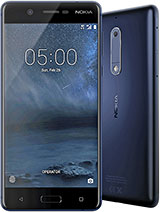
After the longtime  finally, nokia has launched some smartphone-like  NOKIA 6 NOKIA 8 and some other small phone but now it's too late because now there are lot of smartphones trading like iPhone sumsang even chines smartphones are most popular in Indian market like vivo OPPO so on, it will  not be easy to grow up in market for Nokia

Image result for nokiaImage result for nokiaImage result for nokia 8


The traffic on Nokia Conversations has been growing nicely during the first five months of 2012. Compared to the second half of 2010 to11, our global traffic is up by 38%. Traffic coming from the US has grown by a whopping 99%.